
Stored-food insect · Sitophilus granarius · Last updated 14 August 2026
Grain weevils
The grain weevil (Sitophilus granarius) is a 3 to 5 mm beetle recognisable by its rostrum. The female lays directly inside the grain, where the larva develops sheltered — the infestation stays invisible for a long time.
On site within 24h · Re-intervention guarantee if the treated pest reappears
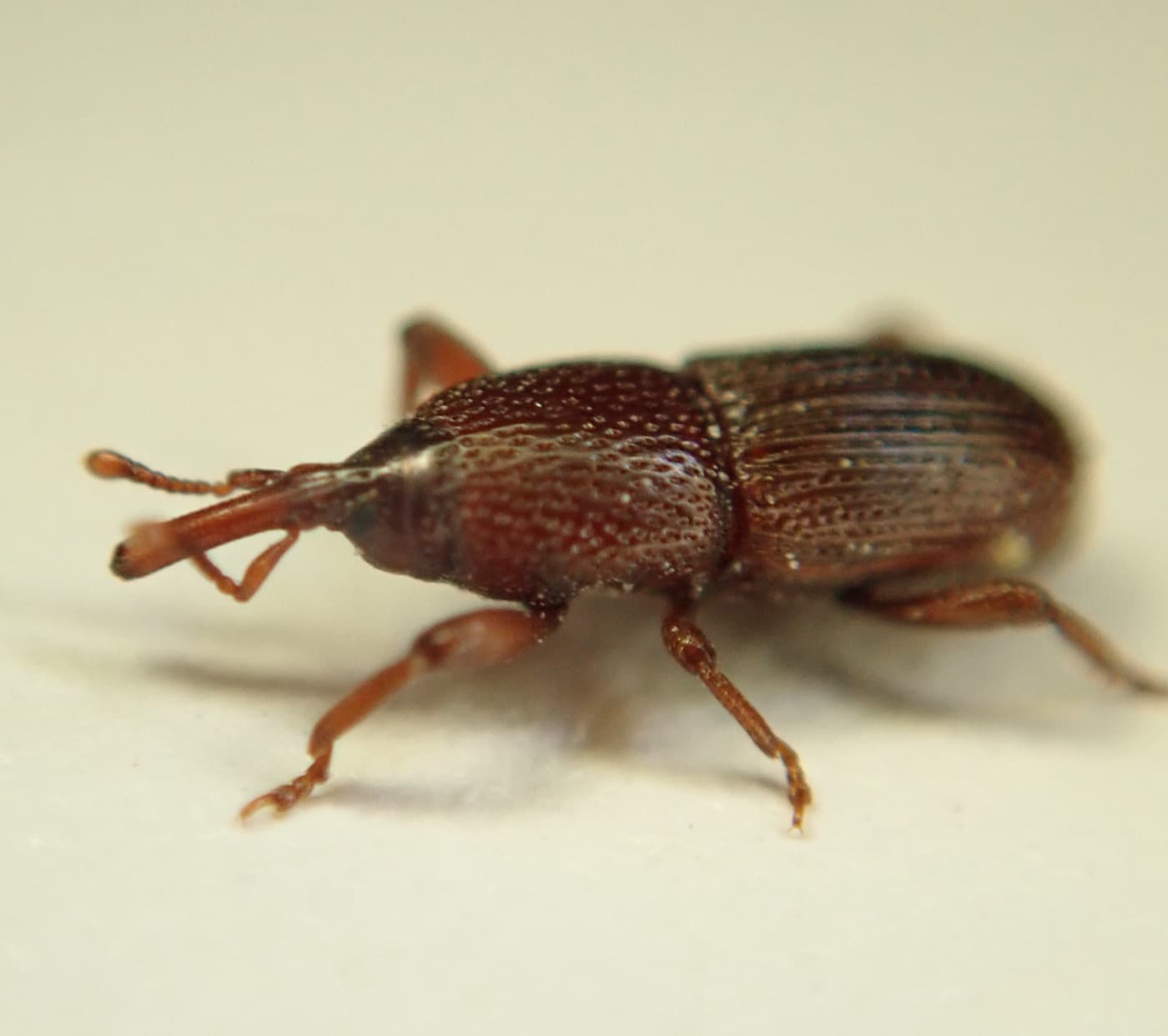
The weevil infests stored cereals, flour, rice, pasta and seeds. The larva tunnels through and hollows out the inside of the grain, leaving empty husks; the adults emerge and recontaminate the stock. An uncontrolled population can destroy an entire pantry and encourage mould growth through the moisture it releases. Very common in milling, the food industry and households, it requires FASFC-compliant elimination in professional settings. Treatment combines destruction of infested goods, cleaning of premises and machines, insecticide treatment and humidity control.
Identify
Signs of infestation
- Adults, 2 to 5 mm, with a visible elongated snout, found in cereals or flour
- Perforated or hollow cereal grains, with small round emergence holes
- A fine whitish dust at the bottom of grain or flour containers
- A slightly sharp smell in affected stock
Where it's found
Grain weevils (Sitophilus granarius, Sitophilus oryzae) attack only whole-grain cereal stocks: wheat, barley, maize, rice, sorghum. They enter via already-infested cereals or bird seed. Rare in standard household use, more common in livestock farms and bulk-storage settings.
Impact
Associated risks
Rapid stock loss
A pair produces 200 to 600 eggs. Larvae develop inside the grain with no visible external sign. The infestation can be well advanced before it's detected by simple observation.
Storage regulations
In professional cereal storage, weevils constitute a regulatory non-compliance. Infested batches are unfit for food sale or as seed stock.
Good practice
Prevention
- 01Thoroughly clean and dry silos and containers between harvests: grain residue is the starting point of any reinfestation
- 02Store bulk grain below 10°C (this almost completely halts larval development)
- 03Inspect cereal deliveries on arrival and never mix old and new stock
Frequently asked questions
What you're asking
How do I detect a grain weevil infestation?
The signs are small brown beetles with a rostrum in or around cereal packets, grains pierced with emergence holes, hollow husks that float in water, and flour that clumps together. The smell can turn musty when the infestation is advanced.
Are grain weevils dangerous to health?
The weevil isn't toxic and doesn't bite, but it contaminates foodstuffs with its droppings, moults and the moisture it generates, encouraging mould and mites. Infested food must be thrown away. In a food business, its presence constitutes non-compliance.
How do I stop grain weevils coming back?
Store dry goods in airtight containers, keep pantries cool and well ventilated, rotate stocks and regularly clean the corners where flour accumulates. In professional settings, a monitoring plan and humidity control complete the treatment.
Insect Control
Related pests
grain weevils problem?
Intervention within 24h, guarantee included.