
Pest insect · Blattella germanica / Blatta orientalis
Cockroaches
The German cockroach (Blattella germanica) resists common insecticides. 1 female lays 4 to 8 egg cases of 30 to 40 eggs. In optimal conditions (25 °C), a generation develops in 60 days.
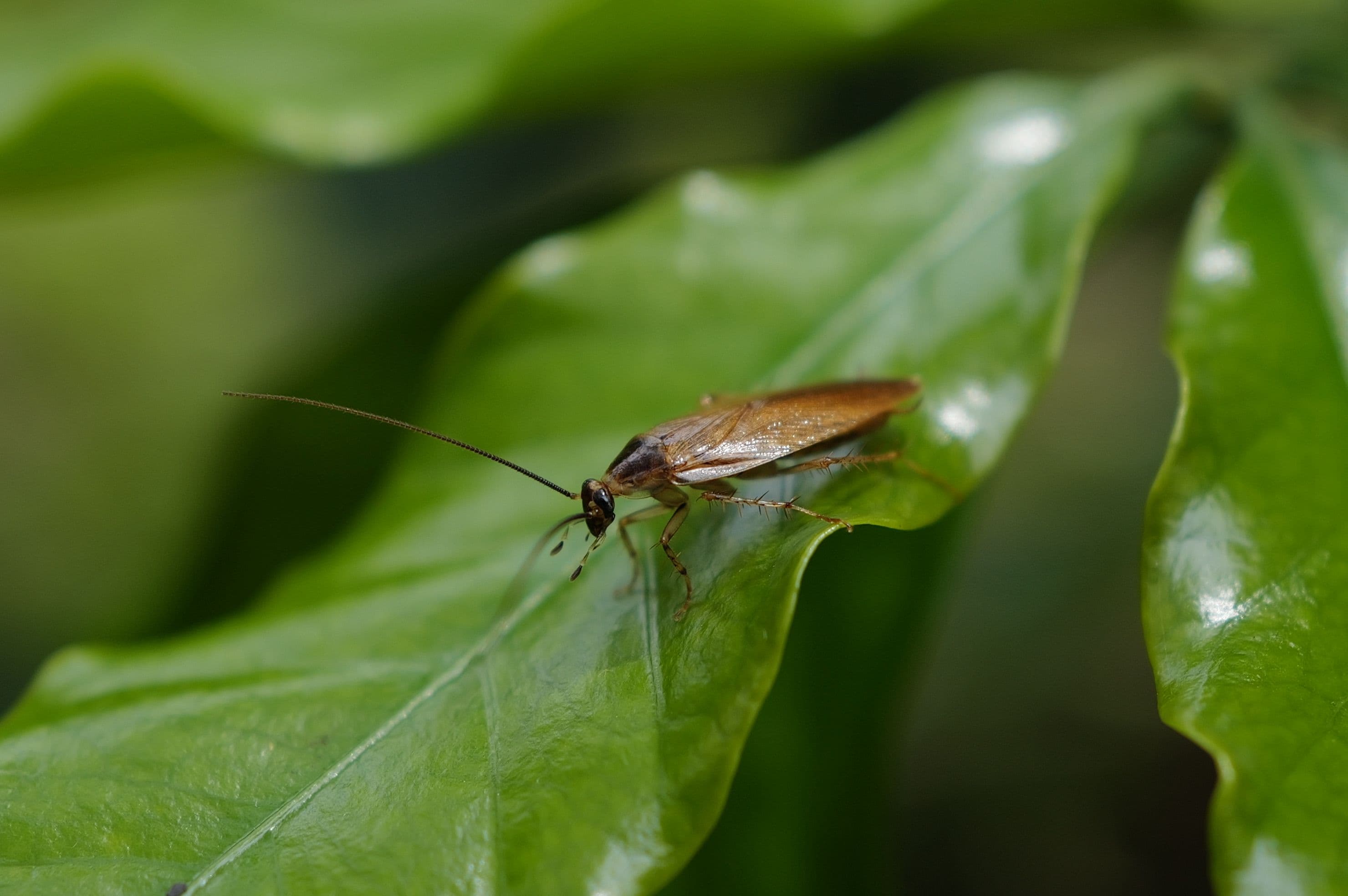
Nocturnal and heat-loving, the cockroach concentrates in kitchens, pipework and electrical panels. It contaminates food and surfaces (salmonellosis, gastroenteritis) and triggers respiratory allergies in chronically exposed occupants.
Identifier
Signes d'infestation
- Crottes noires en points de 1 à 2 mm, concentrées sous l'évier, derrière le réfrigérateur et dans les angles d'armoires
- Odeur musquée légèrement sucrée dans les placards ou les zones humides
- Oothèques (capsules à oeufs) brunes de 6 à 10 mm collées aux surfaces, chaque capsule contenant 30 à 40 oeufs
- Traces de mues (exuvies) transparentes dans les fissures et derrière les plinthes
- Taches jaune-brun laissées sur les joints, cartons et emballages alimentaires
Zones de présence
Nocturne et thermophile, le cafard se concentre dans les zones à chaleur constante et humidité : dessous du lave-vaisselle, intérieur des tableaux électriques, derrière les plaques de cuisson, joints et fissures de carrelage. En journée, il reste caché : une infestation est souvent bien installée avant d'être remarquée.
Impacts
Risques associés
Risque sanitaire
Vecteur de Salmonella, E. coli et staphylocoques via ses pattes et déjections. Ses mues déclenchent des allergies respiratoires chroniques chez les personnes exposées de façon répétée.
Contamination alimentaire
Un seul passage sur des surfaces alimentaires suffit à contaminer. Stockage, plans de travail et vaisselle sont tous exposés sans que la contamination soit visible.
Impact réglementaire
En restauration ou agroalimentaire, la présence de cafards constitue une non-conformité AFSCA immédiate et peut provoquer une suspension d'activité administrative.
Bonnes pratiques
Prévention
- 01Sceller toutes les fissures et joints de carrelage en cuisine, principal vecteur d'entrée et de refuge
- 02Éliminer les sources d'eau stagnante : fuite sous évier, condensation derrière réfrigérateur, bac de récupération de lave-linge
- 03Stocker farine, sucre et céréales en bocaux hermétiques, jamais dans leurs emballages d'origine
- 04Inspecter systématiquement les colis, cartons et appareils électroménagers d'occasion avant introduction dans les locaux
- 05Vider les poubelles chaque soir, sac hermétiquement fermé : un sac ouvert suffit à alimenter une colonie en une nuit
Questions fréquentes
Ce que vous demandez
Why do cockroaches come back after treatment?
Contact sprays kill the visible adults but not the eggs (which resist insecticides). A professional treatment uses ingestion gels that reach hidden individuals and egg cases. A second check on day 14 is often needed for heavy infestations.
Do cockroaches transmit diseases?
Yes. The cockroach carries Salmonella, E. coli and several staphylococcus strains. Its droppings and moults trigger chronic respiratory allergies. In food service, its presence means immediate FASFC non-compliance.
Do I have to leave my home during treatment?
For an insecticide gel treatment, no departure is needed — the gel is applied at targeted points in cracks and crevices. For thermal fogging, a 4-hour absence may be required depending on the technique used.
Problème de cockroaches ?
Intervention sous 24h, garantie incluse.