
Burrowing mammal · Talpa europaea
Moles
The European mole (Talpa europaea) digs up to 20 m of tunnels per day. It devastates lawns, vegetable gardens and root structures while remaining partially protected under Belgian regulations.
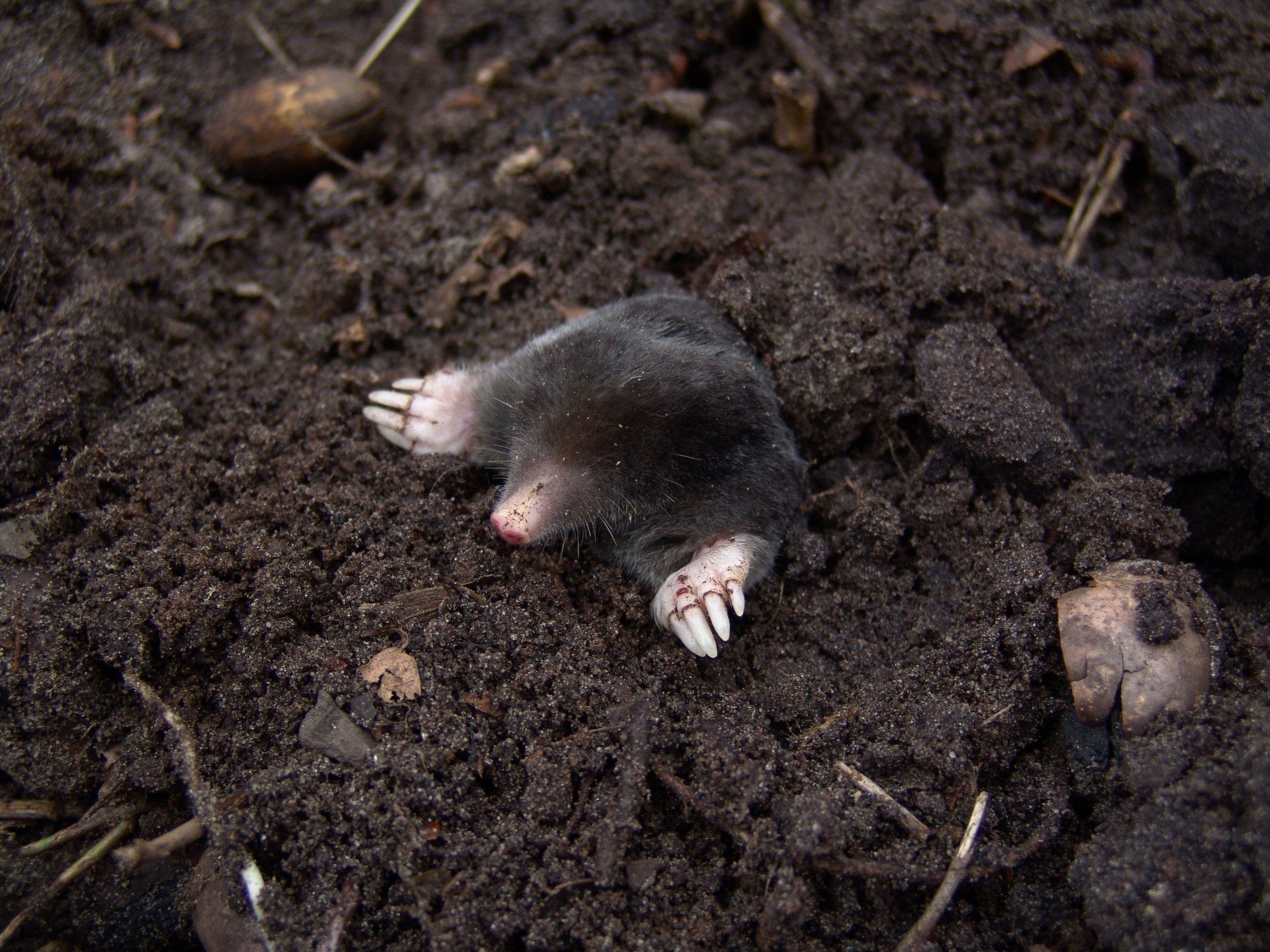
A carnivore (earthworms, grubs), the mole doesn't eat plants but destroys their roots as it digs. Molehills disfigure green spaces and sports grounds. Professional trapping is the most effective method — sonic repellers have very limited effectiveness.
Identifier
Signes d'infestation
- Monticules de terre fraiche (taupinières) apparus du jour au lendemain sur pelouse ou jardin
- Soulèvements linéaires du sol formant des crêtes sous la surface de la pelouse
- Galeries effondrées créant des dépressions irrégulières pouvant atteindre 5 cm de profondeur
- Terre noire et meuble poussée en surface, différente de la couche superficielle du sol
Zones de présence
La taupe (Talpa europaea) occupe les sols meubles et humides riches en lombrics : pelouses soignées, potagers, champs et prairies. Elle creuse deux réseaux : superficiel (chasse) et profond (galeries permanentes à 20-40 cm). Solitaire et territoriale, chaque individu couvre 400 à 1 500 m².
Impacts
Risques associés
Dégâts de pelouse et terrain
Taupinières et galeries rendent les surfaces inégales et dangereuses. Sur terrains sportifs et zones récréatives, les affaissements sont un risque de chute.
Dégâts agricoles et horticoles
Les galeries sèchent les racines des cultures environnantes. En prairie, les taupinières contaminant le foin de terre augmentent le risque de listériose bovine.
Erosion de fondations
Un réseau de galeries dense à proximité de fondations légères peut déstabiliser des bordures, murets et allées dallées sur sol meuble.
Bonnes pratiques
Prévention
- 01Aucun répulsif chimique ou vibratoire n'est scientifiquement validé à grande échelle. Seul le piégeage professionnel donne des résultats durables
- 02Maintenir une végétation rase et bien drainée réduit l'attractivité du sol mais n'est pas suffisant
- 03En potager : grillage anti-taupe enfoncé à 30 cm de profondeur autour des zones critiques
Questions fréquentes
Ce que vous demandez
Are moles protected in Belgium?
In the Walloon and Brussels Regions, the mole is partially protected and trapping is subject to conditions. In Flanders, the regulations differ. Antinox identifies the applicable legal framework before any intervention.
How do I stop mole damage on my lawn?
Professional trapping is the most effective method. Sonic or vibration repellers have very limited, unproven effectiveness. For professional grounds (golf courses, parks), physical protection solutions can be considered.
How many tunnels does a mole dig?
A solitary mole digs 15 to 20 m of tunnels per day and maintains a territory of 1,000 to 3,000 m². Visible molehills are just the spoil exits — the underground network is far more extensive than what shows at the surface.
Problème de moles ?
Intervention sous 24h, garantie incluse.