
Stored-food mite · Acarus siro · Last updated 23 August 2026
Flour mites
The flour mite (Acarus siro), also called the cheese mite, measures less than 0.5 mm. Invisible on its own, it proliferates in stored foodstuffs as soon as ambient humidity exceeds 14%, forming a fine, moving dust.
On site within 24h · Re-intervention guarantee if the treated pest reappears
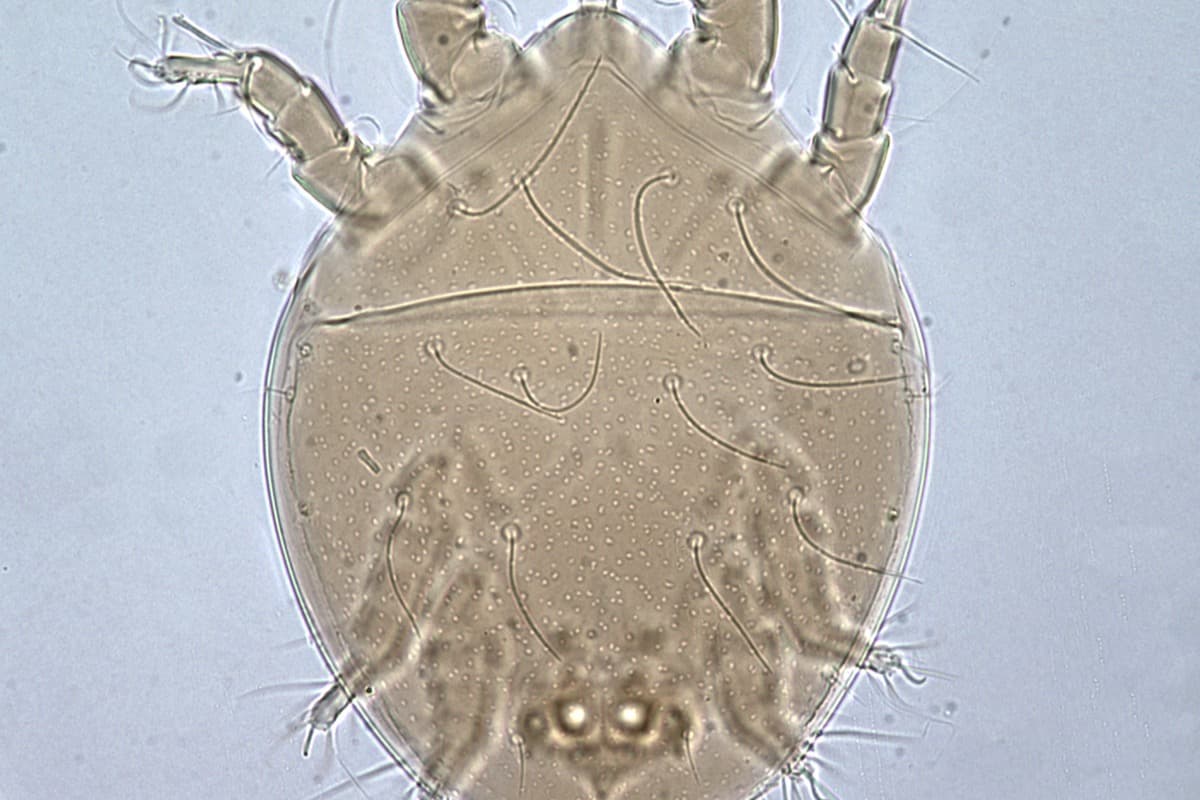
The flour mite colonises flour, cereals, matured cheeses, hams, animal feed and hay. At high density, it gives off a characteristic sweet smell and renders stocks unfit for consumption. Prolonged contact causes 'grocer's itch' (dermatitis) and respiratory allergies in handlers. In the food industry, its presence means stock losses and FASFC non-compliance. Treatment combines removal of contaminated goods, disinsection of the premises and humidity control — the key proliferation factor.
Identify
Signs of infestation
- A whitish, mobile powder on the surface of flour, semolina, cereals or aged cheese
- A characteristic minty or honey-like smell in affected food stocks
- Abnormal clumping and lumps in flour that should be free-flowing
- Itching on the hands and wrists of people handling affected stock (grocer's itch)
Where it's found
The flour mite (Acarus siro) is a mite invisible to the naked eye (0.3 to 0.8 mm). It thrives in stocks of flour, cereals, dried spices, cheese and cured meats stored above 15°C and 60% relative humidity. Flour bought at a supermarket can already be lightly infested.
Impact
Associated risks
Occupational dermatitis
Repeated exposure to flour mites causes grocer's itch (intense itching of hands, wrists and forearms) and respiratory sensitisation in bakers and millers. A recognised occupational disease in Belgium.
Food non-compliance
Infested goods are unfit for consumption and sale. In bakeries and the food industry, affected stock must be destroyed and reported under FASFC procedures.
Good practice
Prevention
- 01Store flour and cereals in airtight glass or metal containers, below 15°C
- 02Keep storage area humidity under 60% relative humidity with active ventilation
- 03Apply the FIFO rule (first in, first out) and never mix new stock with old
- 04Visually and olfactorily inspect every bag of flour on purchase and when storing it
Frequently asked questions
What you're asking
How do I recognise a flour mite infestation?
Flour mites are almost invisible to the naked eye. The signs are a fine beige 'dust' that seems to move slowly on the surface of foodstuffs, a sweet or minty smell, and sometimes itching after handling. A magnifying glass reveals tiny whitish mites with hairy legs.
Are flour mites dangerous to health?
Yes, with repeated exposure. Contact causes dermatitis ('grocer's itch') and inhaling their allergens can trigger rhinitis and asthma, particularly among milling and cheese-maturing professionals. Infested foodstuffs must not be consumed.
How do I stop flour mites coming back?
The flour mite needs humidity to proliferate. Prevention relies on dry storage (humidity below 14%), good ventilation, airtight containers, stock rotation and regular cleaning of storerooms. In professional settings, humidity monitoring and a monitoring plan complete the treatment.
Insect Control
Related pests
flour mites problem?
Intervention within 24h, guarantee included.