
Pest rodent · Rattus norvegicus
Rats
The brown rat (Rattus norvegicus) is the most widespread rodent in Belgium. A female produces up to 5 litters of 6 to 12 pups per year — an infestation can double in 3 weeks.
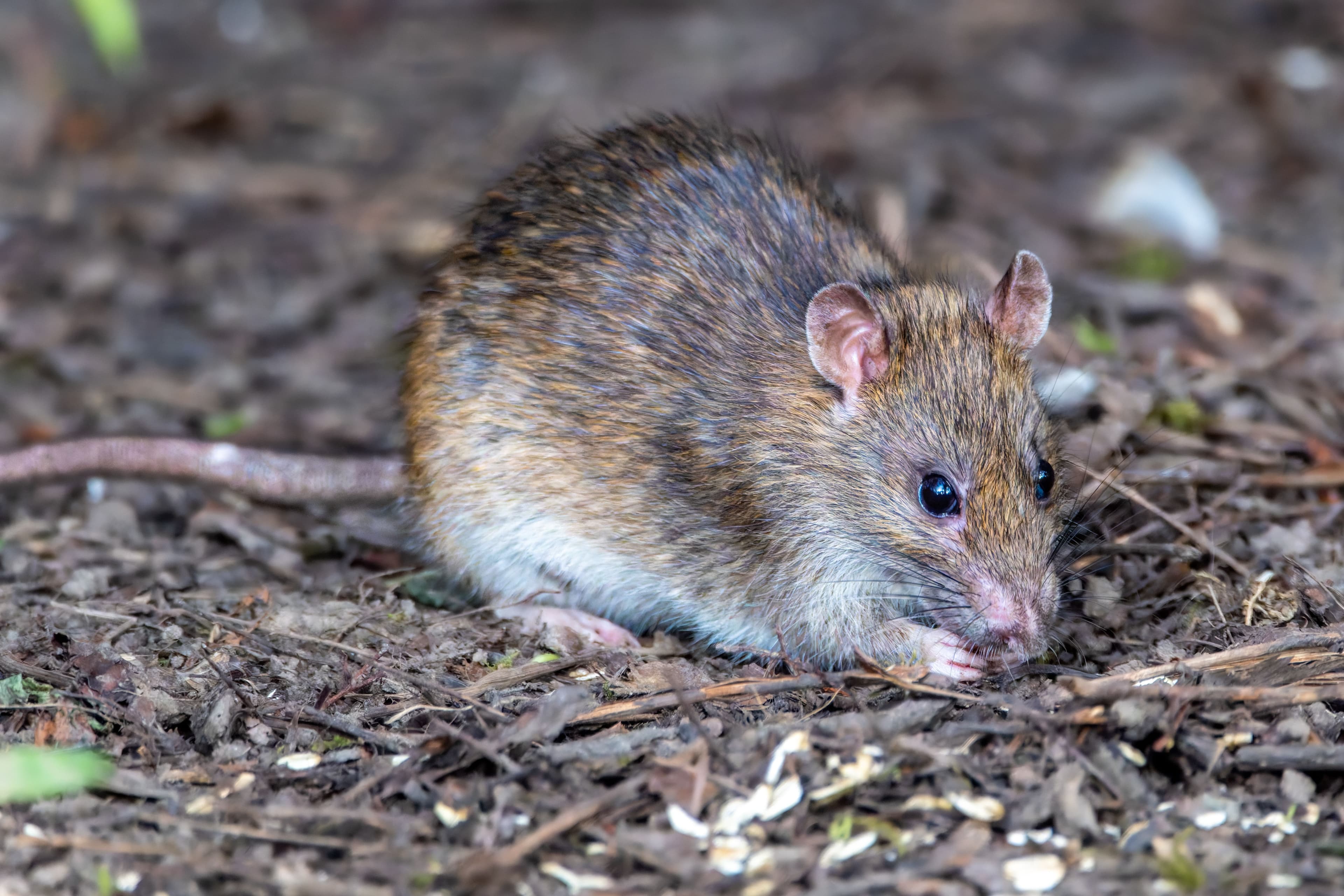
Omnivorous and nocturnal, the rat colonises basements, sewers, attics and warehouses. It gnaws through cables, pipes and load-bearing structures. As a carrier of leptospirosis, salmonellosis and hantavirus, it poses a real health risk to occupants and the food chain.
Identifier
Signes d'infestation
- Crottes noires allongées de 10 à 20 mm, à extrémités pointues, le long des murs et derrière les appareils
- Traces graisseuses (runs) sur les plinthes, murs et tuyaux : les rats longent toujours les parois et laissent une marque huileuse visible
- Bruits de grattage nocturne dans les plafonds, sous les planchers ou en cave
- Marques de dents sur câbles, bois, emballages alimentaires et même le béton
- Odeur d'urine ammoniaquée persistante dans les espaces confinés
Zones de présence
Surmulot (Rattus norvegicus) : vit sous terre (égouts, drains, berges), envahit les sous-sols, caves et rez-de-chaussée. Rat noir (Rattus rattus) : grimpeur, occupe les toitures, greniers et combles. Les deux espèces pénètrent par des ouvertures de 2 cm.
Impacts
Risques associés
Leptospirose
Bactérie Leptospira dans l'urine du rat, transmise par contact cutané avec eau ou sol contaminé. Maladie à déclaration obligatoire (SPF Santé Publique). Risque élevé en cas d'inondation.
Dégâts structurels
Un rat ronge câbles électriques, tuyaux plastiques et isolants. Câbles dénudés dans les combles = risque d'incendie direct. Dégâts assurance rarement couverts sans traitement préalable prouvé.
Non-conformité AFSCA
En industrie alimentaire, restauration ou logistique, la présence de rats entraîne une non-conformité immédiate avec risque de suspension d'activité et d'amende administrative.
Bonnes pratiques
Prévention
- 01Sceller toutes les ouvertures supérieures à 2 cm autour des passages de canalisations et câbles
- 02Utiliser des poubelles extérieures à couvercle verrouillé : un sac ouvert la nuit suffit à attirer une colonie en 48h
- 03Supprimer les sources d'eau accessibles : robinets qui gouttent, drains bouchés, eaux de pluie stagnantes
- 04Tailler la végétation à 50 cm minimum du bâtiment : lianes et branches font office de pont vers les toitures
- 05Inspecter annuellement caves, vides sanitaires et regards de canalisations pour détecter les signes d'entrée
Questions fréquentes
Ce que vous demandez
How do I detect a rat infestation?
Telltale signs: cylindrical droppings 1 to 2 cm long, gnaw marks on cables or wood, runs in the ground, a musky smell. Rats are active at night — hearing them run inside walls or ceilings is a clear sign of infestation.
Are the baits dangerous for my animals?
No. The rodenticides are placed in locked bait stations inaccessible to children and animals. All products are authorised by the FPS Public Health and comply with Belgian biocide regulations (Royal Decree of 8 May 2014).
How long does the treatment take?
Results are visible 7 to 14 days after the baits are placed. The guarantee covers any reappearance at no extra cost, for the period stated on your quote.
Problème de rats ?
Intervention sous 24h, garantie incluse.