
Parasitic insect · Ctenocephalides felis / Ctenocephalides canis · Last updated 24 August 2026
Fleas
The cat flea (Ctenocephalides felis) is the most widespread in Belgium, even in pet-free homes. 1 female lays up to 50 eggs per day. Eggs, larvae and pupae make up 95% of the infestation — and they're not on the animal.
On site within 24h · Re-intervention guarantee if the treated pest reappears
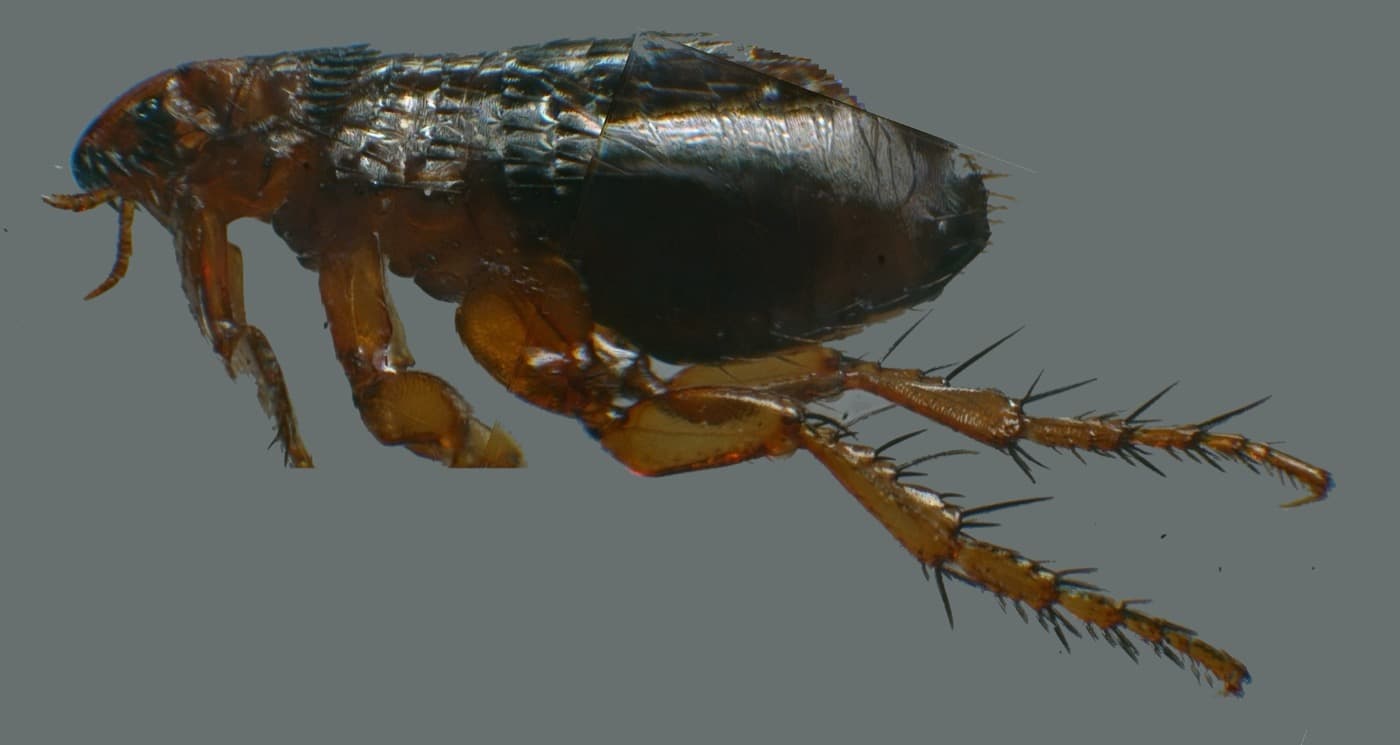
Fleas jump up to 30 cm horizontally and concentrate in carpets, bedding and skirting boards. An effective treatment must simultaneously target the animal (vet) and the environment (adult insecticide + growth regulator). Without environmental treatment, reinfestation is almost certain.
Identify
Signs of infestation
- Itching around ankles and wrists among occupants, with clustered red spots
- Small brown jumping insects visible on bedding or pets' fur
- Flea dirt: black grains that turn red on damp white paper — a quick confirmation with no equipment needed
- Repeated scratching and chewing by the pet on its back and flanks
Where it's found
Flea larvae make up 90% of the life cycle and develop in the environment: carpets, floorboard joints, pet bedding, upholstered sofas. Adults only jump onto the animal to feed. A home can stay infested for 12 months after the pet is gone, as dormant pupae wake up in response to vibration.
Impact
Associated risks
Allergic reaction
Flea saliva causes flea allergy dermatitis (FAD) in animals and intense local reactions in sensitive humans. Prompt veterinary treatment is needed.
Tapeworm transmission (Dipylidium)
Flea larvae ingest dog tapeworm eggs. The animal becomes infected by swallowing a flea while grooming. Internal deworming treatment should be combined with flea treatment.
Good practice
Prevention
- 01Treat ALL pets in the household simultaneously with a veterinary external parasiticide: treating only one leaves the other as a reservoir
- 02Wash bedding and sofa covers at 60°C every week during treatment
- 03Vacuum carpets and corners daily for 3 to 4 weeks after the environment is treated with insecticide
Frequently asked questions
What you're asking
I have fleas but no pet. Is that possible?
Yes. Fleas survive in the environment for up to 12 months without a host. They're brought in by wild animals (hedgehogs, rats), on clothing, or they hatch from a previous occupant's infestation. Pupae can lie dormant for up to 6 months and hatch at the slightest stimulus.
My cat is treated but I still have fleas. Why?
Because 95% of the infestation lives in the environment (eggs, larvae, pupae in the carpet, sofas, skirting boards) — not on the animal. Veterinary treatment alone isn't enough. A biocide + insect growth regulator (IGR) treatment in every room is essential.
Do fleas bite humans too?
Yes. In the absence of its preferred host animal, the cat flea bites humans, usually on the ankles and shins. It can transmit dipylidiasis (tapeworm) and, in rare cases in Europe, bartonellosis (cat scratch disease).
Insect Control
Related pests
fleas problem?
Intervention within 24h, guarantee included.