
Textile insect · Anthrenus verbasci
Carpet beetles
The varied carpet beetle (Anthrenus verbasci) is a small beetle of 2 to 3 mm. The adult, harmless, is drawn to light; it's the hairy larvae that devour wool, silk, leather, furs, feathers and taxidermy collections.
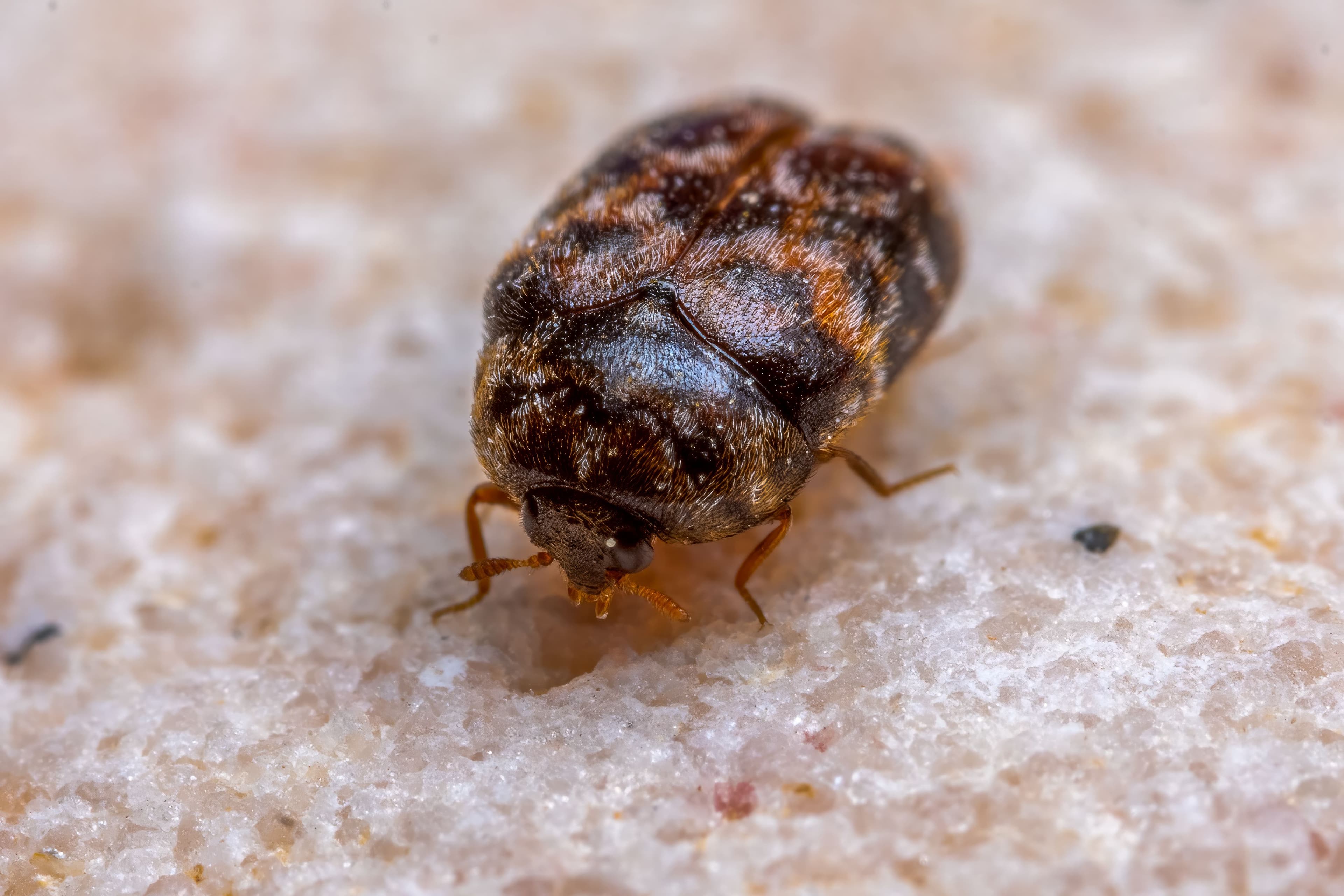
The carpet beetle lays in carpets, under furniture, in ducts and old bird nests. Its 'woolly bear' larvae feed on keratin: carpets, woollens, felts, but also dry goods and dead insects. The damage — scattered, irregular holes — is often mistaken for moth damage. Especially common in homes, museums and storage facilities, the larvae hide in dark, undisturbed areas. Treatment combines deep cleaning, targeted insecticide treatment of egg-laying areas and removal of the sources (old nests, feathers, forgotten woollens).
Identifier
Signes d'infestation
- Larves ovales de 4 à 7 mm couvertes de poils bruns touffus (chenilles de tapis) dans les fibres de tapis ou meubles rembourrés
- Dégâts irréguliers sur les bords et dessous des tapis en fibres naturelles, souvent dans les zones peu déplacées
- Adultes (2 à 3 mm, tacheté blanc-noir-rouge) visibles sur les fleurs ou les fenêtres au printemps
- Exuvies (mues) de larves dans les recoins sombres, derrière les radiateurs et sous les meubles
Zones de présence
L'anthrène des musées (Anthrenus verbasci) se développe d'abord dans les nids d'oiseaux en toiture (gite primaire naturel). Les adultes entrent via les fenêtres au printemps et pondent dans les zones non perturbées. Les dégâts apparaissent sur les bords des tapis en laine, sous les canapés, dans les collections de peaux et fibres naturelles stockées.
Impacts
Risques associés
Dégâts textiles
Les larves découpent des fibres de laine, coton, fourrure et plumes avec une régularité qui ressemble à de l'usure mais suit toujours les zones sombres et immobiles. Tapis anciens et collections muséales particulièrement vulnérables.
Source nid d'oiseau
Sans suppression du nid d'oiseau en toiture ou gouttière (gite primaire), tout traitement intérieur est temporaire. Les adultes réinvestissent le bâtiment chaque printemps.
Bonnes pratiques
Prévention
- 01Supprimer les nids d'oiseaux dans les gouttières et ventilations de toiture (gite primaire des anthrènes)
- 02Aspirer sous et derrière tous les meubles imposants au minimum deux fois par an, y compris les bords de tapis
- 03Placer des pieges à phéromones en mars-avril pour détecter les adultes avant les pontes
Questions fréquentes
Ce que vous demandez
Carpet beetle or moth: how do I tell the difference?
The carpet beetle is a beetle: the adult is a small round, mottled beetle, the larva is stocky and covered in hairs. The moth is a winged insect. Carpet beetles leave scattered holes all over, including in carpets and woollens on the floor, while moths concentrate their damage in wardrobes. Small hairy larvae confirm the carpet beetle.
Where do carpet beetles lay their eggs?
In dark, undisturbed areas: under skirting boards and carpets, behind wardrobes, in ventilation ducts, and frequently in old bird or wasp nests in the roof. These nests are an infestation source that must be removed to prevent recurrence.
How do I protect my clothes and carpets from carpet beetles?
Vacuum regularly under furniture and along skirting boards, clean or freeze stored items, keep woollens and furs in airtight covers, and remove old bird nests from the roof. As soon as damage is visible, professional treatment of the egg-laying areas is needed because the larvae resist surface treatments.
Problème de carpet beetles ?
Intervention sous 24h, garantie incluse.