
Parasitic insect · Cimex lectularius · Last updated 23 August 2026
Bed bugs
The bed bug (Cimex lectularius) feeds exclusively on human blood at night, leaving bites in a line. 1 female lays 200 to 500 eggs over her life and survives 6 to 18 months without a meal.
On site within 24h · Re-intervention guarantee if the treated pest reappears
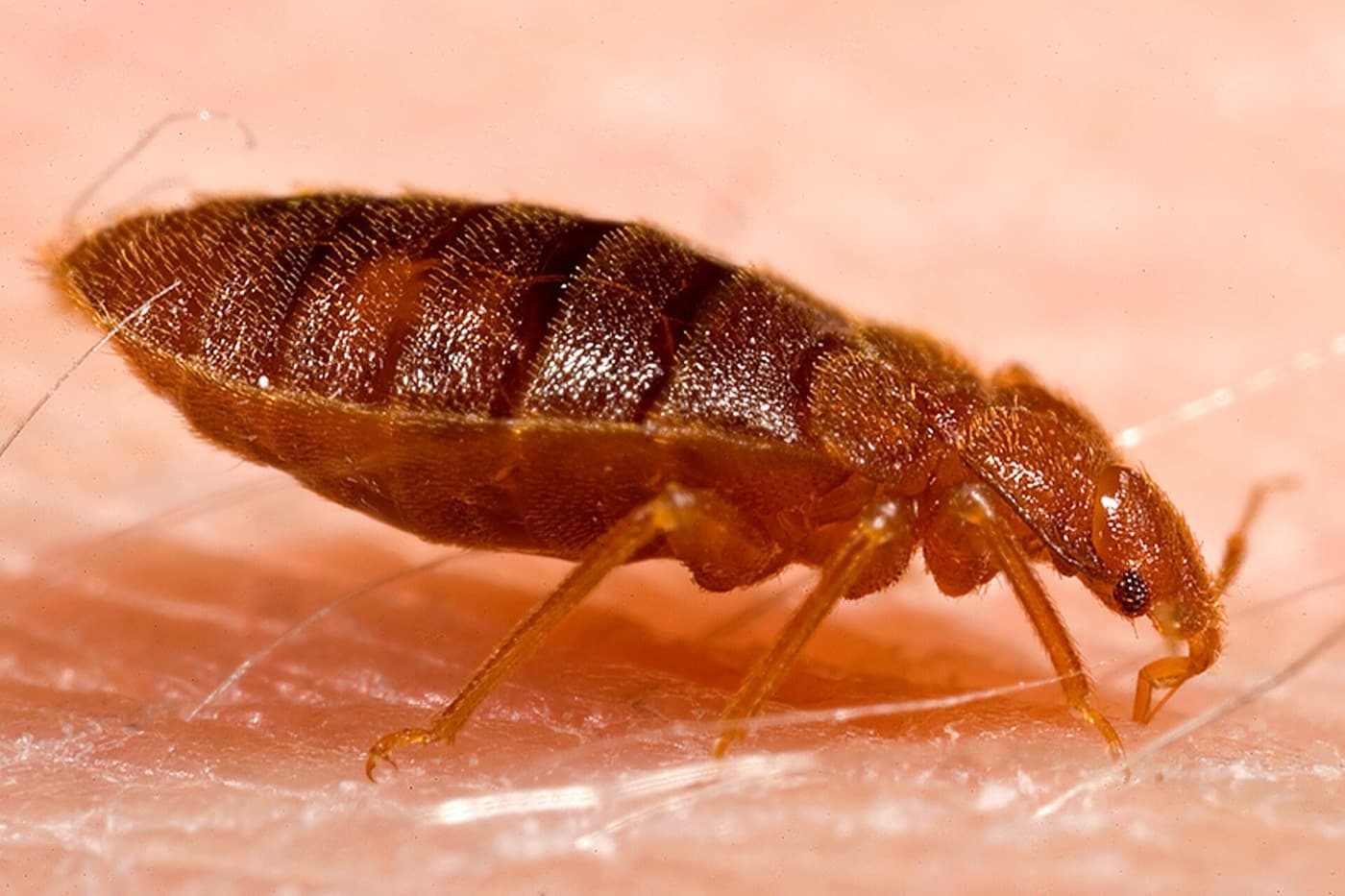
Bed bugs don't transmit diseases, but their presence causes insomnia, dermatitis and severe psychological stress. Resistant to pyrethrins, they require a combined treatment (heat or staged insecticide gel) to eliminate eggs, nymphs and adults.
Identify
Signs of infestation
- Rust-coloured stains on mattress seams, fitted sheet and bed frame (droppings and digested blood)
- Small black dots on the headboard and lower wall behind the bed (dried faeces)
- A sweetish, slightly musky, nutty smell in the bedroom (a sign of an infestation already established for several weeks)
- Bites in a line or in clusters (2 to 6 grouped bites) on exposed skin, noticed in the morning
- Transparent shed skins (exuviae) in cracks of the bed frame
Where it's found
The bed bug (Cimex lectularius) doesn't fly or jump. It hides in mattress seams, inside the box spring, cracks in the headboard, behind skirting boards and electrical outlets. It follows body heat from up to 1 m away. It travels passively in luggage, clothing and furniture.
Impact
Associated risks
Health impact
Bites are painless but intensely itchy, and can trigger severe allergic reactions. Repeated scratching can lead to skin superinfection (impetigo). No pathogen transmission has been documented to date.
Psychological impact
Chronic sleep deprivation, anxiety and post-traumatic stress have been documented in victims of long-standing infestations. The psychological toll is often underestimated in assessments.
Fast spread
A female lays 200 to 500 eggs. A single bed bug introduced via a travel bag can found a colony within 3 months. It spreads between units through service ducts and false ceilings in collective housing.
« Thank you so much! I called in a panic about a bed bug infestation at my place in Liège and the technician came quickly to solve the problem. All with kindness and efficiency. I recommend! »
Nela Martin
Reviews translated from the original French — read them in full on Google.
See all reviews on Google →Compare
Heat treatment or chemical treatment?
| Criterion | Heat treatment | Chemical treatment |
|---|---|---|
| Intervention duration | 4 to 6h depending on the area | 2 to 3h |
| Effectiveness on eggs | Total from 58°C sustained for 90 minutes | Partial: requires split treatments to cover new hatchings |
| Products used | No chemical products | Split insecticide gel applications |
| Re-entry delay | Back home the same evening | 2 to 4h (absence during treatment) |
| Best for | Large or long-standing infestations | Light to moderate infestations, caught early |
Good practice
Prevention
- 01While travelling: never put luggage on the bed. Use the luggage rack or place your suitcase in the bathroom
- 02Inspect mattress seams and the headboard on arrival at any accommodation (even upmarket ones)
- 03Wash all travel clothing at 60°C or run it through 20 minutes on a hot tumble-dryer cycle as soon as you're home
- 04Avoid second-hand furniture and mattresses without prior inspection (the main source of introduction into homes)
- 05In collective housing: report immediately to the building manager, as treatment must cover all adjacent units
Frequently asked questions
What you're asking
How do I know if I have bed bugs?
Main signs: bites in a line (3 bumps aligned) on the neck, arms or legs upon waking; dark stains (droppings) on the mattress or seams; a sweet, musky smell in the bedroom. Pearly white 1 mm eggs in the mattress seams confirm the infestation.
Is heat treatment effective against bed bugs?
Yes. A thermal treatment (58 °C for at least 90 min) eliminates every development stage including the eggs — the most effective method for major infestations. It uses no chemicals and doesn't require an extended evacuation.
Do I have to throw away my mattress?
Not necessarily. If the mattress is in good condition, a dedicated bed-bug-proof cover combined with the treatment is enough. Throwing out the mattress without treating the environment (skirting boards, sockets, furniture) doesn't solve the infestation — bed bugs occupy 18 different types of hiding spots.
Insect Control
Related pests
bed bugs problem?
Intervention within 24h, guarantee included.