
Pest crustacean · Armadillidium vulgare / Porcellio scaber
Woodlice
The woodlouse (Armadillidium vulgare) proliferates in damp environments — basements, crawl spaces, masonry joints. Its mass presence often indicates a structural moisture problem.
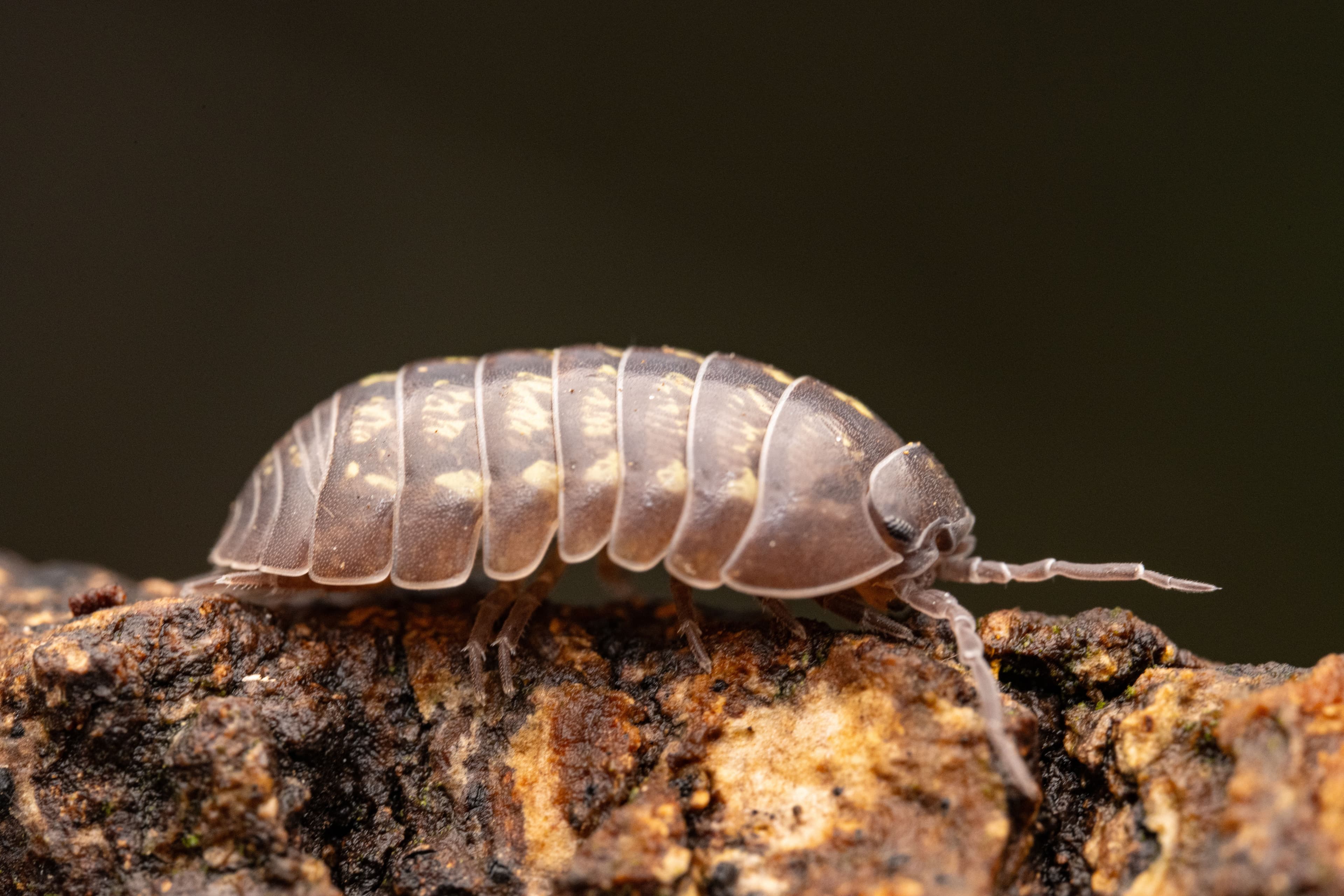
Woodlice don't bite and don't transmit diseases, but their presence in large numbers signals a moisture or ventilation problem. They feed on decomposing organic matter. Treatment combines drying the premises with a contact insecticide in transit areas.
Identifier
Signes d'infestation
- Crustacés ovales gris de 10 à 18 mm trouvés sous les pots de fleurs, dalles de jardin, planches humides
- Présence dans les coins de cave humide, sous l'évier, derrière les radiateurs de sous-sol
- Groupes de cloportes actifs la nuit, retournant à l'abri dès les premières heures lumineuses
Zones de présence
Le cloporte (Porcellio scaber, Armadillidium vulgare) est un crustacé terrestre, non un insecte. Il ne survit que dans les zones maintenues au-dessus de 70% d'humidité relative. Sa présence dans un bâtiment est un indicateur fiable de problème d'humidité : infiltration, condensation chronique, drainage déficient.
Impacts
Risques associés
Indicateur d'humidité
Le cloporte ne cause pas de dommage direct à la structure. Mais l'humidité qui l'attire provoque moisissures, décollement des enduits et dégradation du bois. Traiter le cloporte sans traiter l'humidité est inefficace.
Dégâts potager
En grande densité, les cloportes s'attaquent aux jeunes pousses, semis et fruits au sol (fraises, concombres). Impact négligeable à faible densité, significatif lors d'infestations marquées.
Bonnes pratiques
Prévention
- 01Identifier et corriger la source d'humidité : drainage périmétrique, ventilation de cave, imperméabilisation
- 02Éloigner le bois, gravats et matières organiques des murs du bâtiment
- 03Sceller les joints de sol/mur en cave avec enduit hydraulique ou mortier
Questions fréquentes
Ce que vous demandez
Are woodlice dangerous?
No, woodlice don't bite, don't burrow under the skin and don't transmit diseases. But their mass presence in living spaces signals a moisture or insufficient ventilation problem worth treating at the source.
Why do I have woodlice in my basement?
Woodlice need high humidity (over 70%) to survive. A poorly ventilated basement with degraded masonry joints or rising damp is their ideal habitat. Drying the premises and a dehumidifier reduce the pressure before any treatment.
Is insecticide treatment effective against woodlice?
A contact insecticide in transit areas (skirting boards, joints, door thresholds) works short-term. For a lasting solution, the chemical treatment must be paired with structural measures: sealing cracks, improving ventilation, treating the moisture source.
Problème de woodlice ?
Intervention sous 24h, garantie incluse.