
Field rodent · Apodemus sylvaticus
Field mice
The wood mouse (Apodemus sylvaticus) lives outdoors: gardens, vegetable patches, forest edges. It enters homes in autumn to overwinter and stores provisions in its burrows.
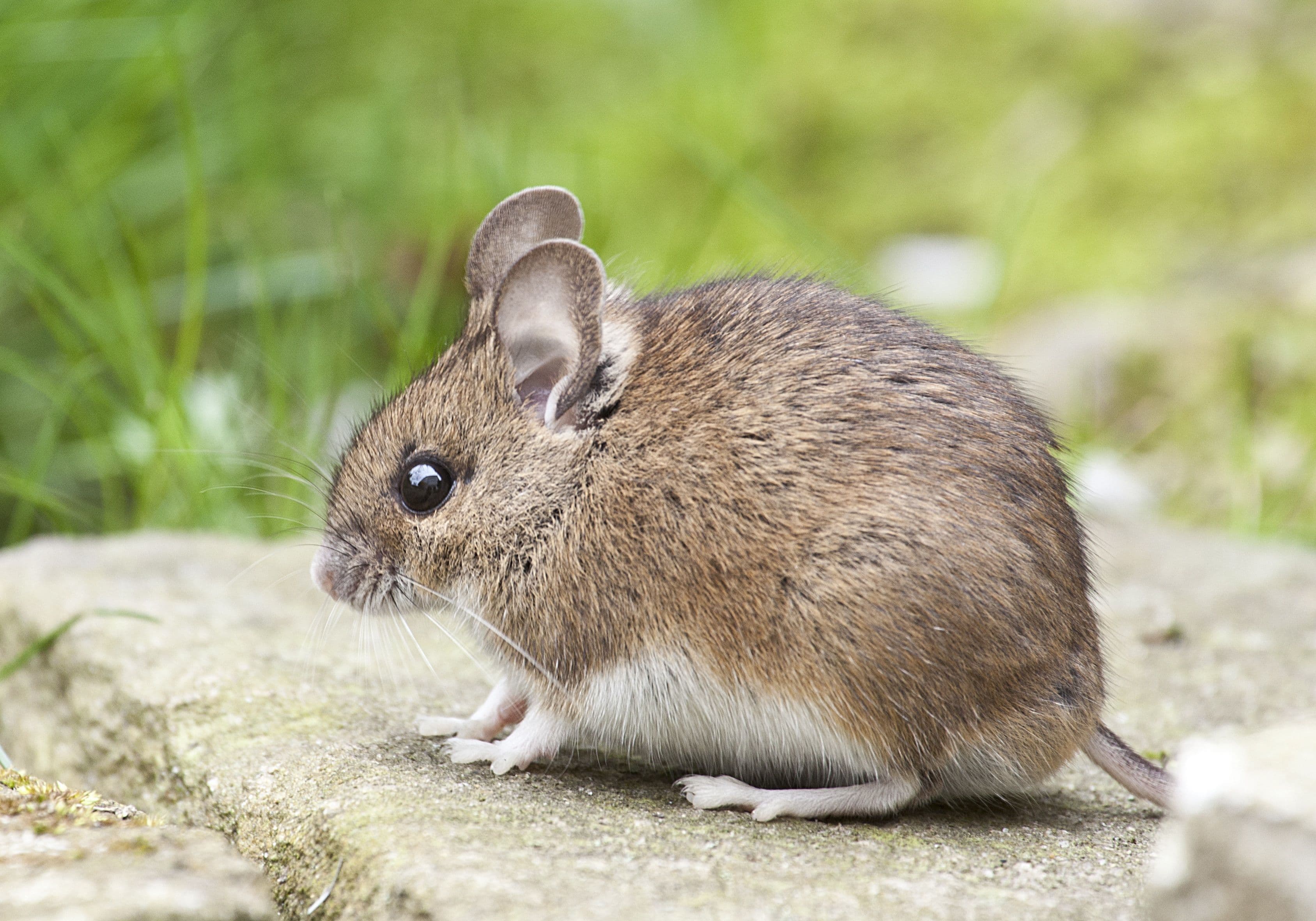
Unlike the house mouse, the field mouse digs branched burrows 50 to 100 cm deep in which it stores seeds, nuts and bulbs. It eats seedlings, root vegetables and bulb plants, causing significant damage to vegetable gardens. In autumn, it moves into garages, basements and attics. It can transmit leptospirosis through its urine.
Identifier
Signes d'infestation
- Orifices ronds de 3 à 4 cm de diamètre au pied des murs, haies ou tas de bois
- Provisions de graines, noix et baies entassées dans des cavités (signe distinctif du mulot, absent chez le rat ou la souris)
- Dégâts sur bulbes, graines et légumes-racines dans le potager, souvent pendant la nuit
- Crottes de 4 à 6 mm, plus petites et plus claires que celles du rat
Zones de présence
Animal de lisière (haies, bords de champs, talus), le mulot sylvestre (Apodemus sylvaticus) colonise les bâtiments en automne dès les premières fraicheurs. Il s'installe dans les murs creux, sous les appentis et dans les matériaux stockés. Excellent grimpeur, il peut atteindre les combles.
Impacts
Risques associés
LCMV (chorioméningite lymphocytaire)
Virus transmis par contact avec urine, déjections ou poussières de nid de mulot. Bénin chez l'adulte sain, mais potentiellement grave pour les personnes immunodéprimées et femmes enceintes (risque foetal).
Dégâts potager et stockage
Le mulot ronge bulbes, graines en germination, câbles et isolants. Ses provisions cachées attirent d'autres nuisibles (mites alimentaires, charançons).
Bonnes pratiques
Prévention
- 01Sceller les ventilations de cave et les passages de câbles avant octobre, période d'entrée principale des mulots en bâtiment
- 02Stocker les graines de jardin dans des bidons metalliques hermétiques, jamais dans des sacs
- 03Éloigner les tas de bois, compost et matériaux de stockage à au moins 50 cm des murs
Questions fréquentes
Ce que vous demandez
How do I tell a field mouse from a house mouse?
The field mouse is larger (8–10 cm body) with large prominent black eyes, big ears and a two-tone coat — russet brown on top, off-white on the belly. Its developed hind legs let it leap. The house mouse is smaller, uniform grey-brown, and lives indoors year-round.
Is the field mouse dangerous to health?
Yes. Its urine can contain Leptospira interrogans, the bacterium responsible for leptospirosis (fever, jaundice, kidney damage). The risk is small but real, particularly for gardeners without gloves and owners of infested basements. Licensed rodenticides must be used in a food-safe manner.
Can I just leave field mice in my garden?
In small numbers, their impact is limited. But an uncontrolled population systematically destroys bulbs, seedlings and root vegetables. In autumn, they colonise buildings. Preventive treatment from September onwards is recommended for vegetable gardens.
Problème de field mice ?
Intervention sous 24h, garantie incluse.