
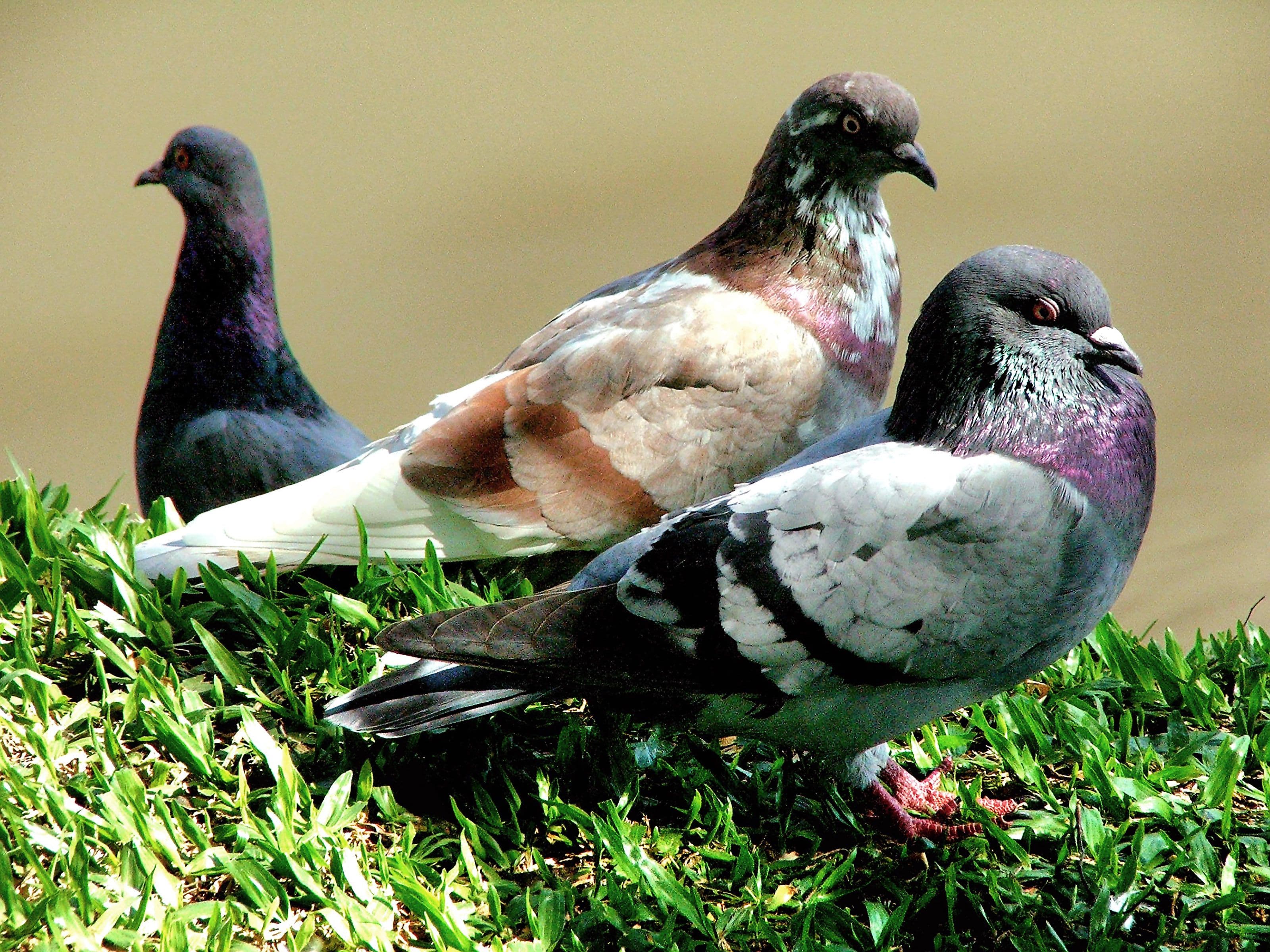
Pest bird · Columba livia
Pigeons
The feral pigeon (Columba livia) produces droppings with a pH of 3 to 4.5 that degrade concrete, zinc and limestone. 1 pair produces 2 to 6 broods per year. The droppings carry salmonellosis, chlamydiosis and cryptococcosis.
Protective installations (UV-resistant polyethylene netting, stainless steel spikes, tensioned wires) prevent roosting without harming the birds. Their lifespan is 10 to 15 years depending on the system. Capturing or directly eliminating pigeons is regulated by the Belgian law of 12 July 1973.
Identifier
Signes d'infestation
- Accumulation de fientes blanchâtres sur les rebords, corniches, gouttières et surfaces horizontales
- Matériaux de nidification (brindilles, plumes, déchets) obstruant gouttières et ventilations
- Présence régulière et bruyante à l'aube et au crépuscule sur les reliefs de toiture
- Dégradation visible des matériaux : enduit cloqué, metal corrodé, joints de zinc altérés
Zones de présence
Le pigeon biset (Columba livia domestica) utilise tout relief horizontal inaccessible aux prédateurs : rebords de fenêtre, corniches, toits plats, garde-corps, gaines techniques et structures de pont. En zone urbaine, il vit en colonies pouvant dépasser 50 individus par site d'implantation.
Impacts
Risques associés
Dégâts structurels
Les fientes de pigeon ont un pH d'environ 3 (acide). Elles corrodent les zinc, calcaires et enduits en quelques années. 1 kg de fientes par pigeon par an = dégradation continue des parements et systèmes de gouttière.
Risques sanitaires
Les fientes séchées aérosolisées lors du nettoyage transportent Histoplasma capsulatum, Cryptococcus neoformans et Chlamydia psittaci (psittacose : fièvre, toux, pneumonie possible). Nettoyage sans protection respiratoire P3 interdit.
Réglementation Bruxelles
Nourrir les pigeons en voie publique est interdit à Bruxelles depuis 2014 (ordonnance administrative, amende de 25 à 200 euros). En Wallonie, la réglementation varie par commune.
Bonnes pratiques
Prévention
- 01Installer des pics anti-pigeons ou filets sur tous les rebords horizontaux : seule méthode durable sans intervention répétée
- 02Obstruer les ouvertures de gouttières et ventilations avec grillage inox à maille 2 cm
- 03Ne jamais nourrir les pigeons, même indirectement (restes alimentaires en terrasse) : la colonie revient systématiquement là où elle a trouvé de la nourriture
Questions fréquentes
Ce que vous demandez
Are pigeon droppings really corrosive?
Yes. Pigeon droppings have a pH of 3 to 4.5 — as acidic as vinegar. They attack concrete, limestone, zinc and paint. On a roof, a 2-to-3-year build-up can cause water ingress and accelerate structural degradation.
Is anti-pigeon netting allowed in Belgium?
Yes. Installing polyethylene netting and stainless steel spikes is legal and recommended. Capturing or directly eliminating pigeons is regulated by the law of 12 July 1973 on wildlife protection. Physical deterrence methods don't harm the birds.
How long does anti-pigeon netting last?
Professional-grade UV-resistant polyethylene netting lasts 10 to 15 years depending on exposure. Stainless steel spikes are guaranteed rust-free for 10 years. Antinox guarantees the installation for 2 years against any fitting defect.
Problème de pigeons ?
Intervention sous 24h, garantie incluse.